

.svg)

.jpg)
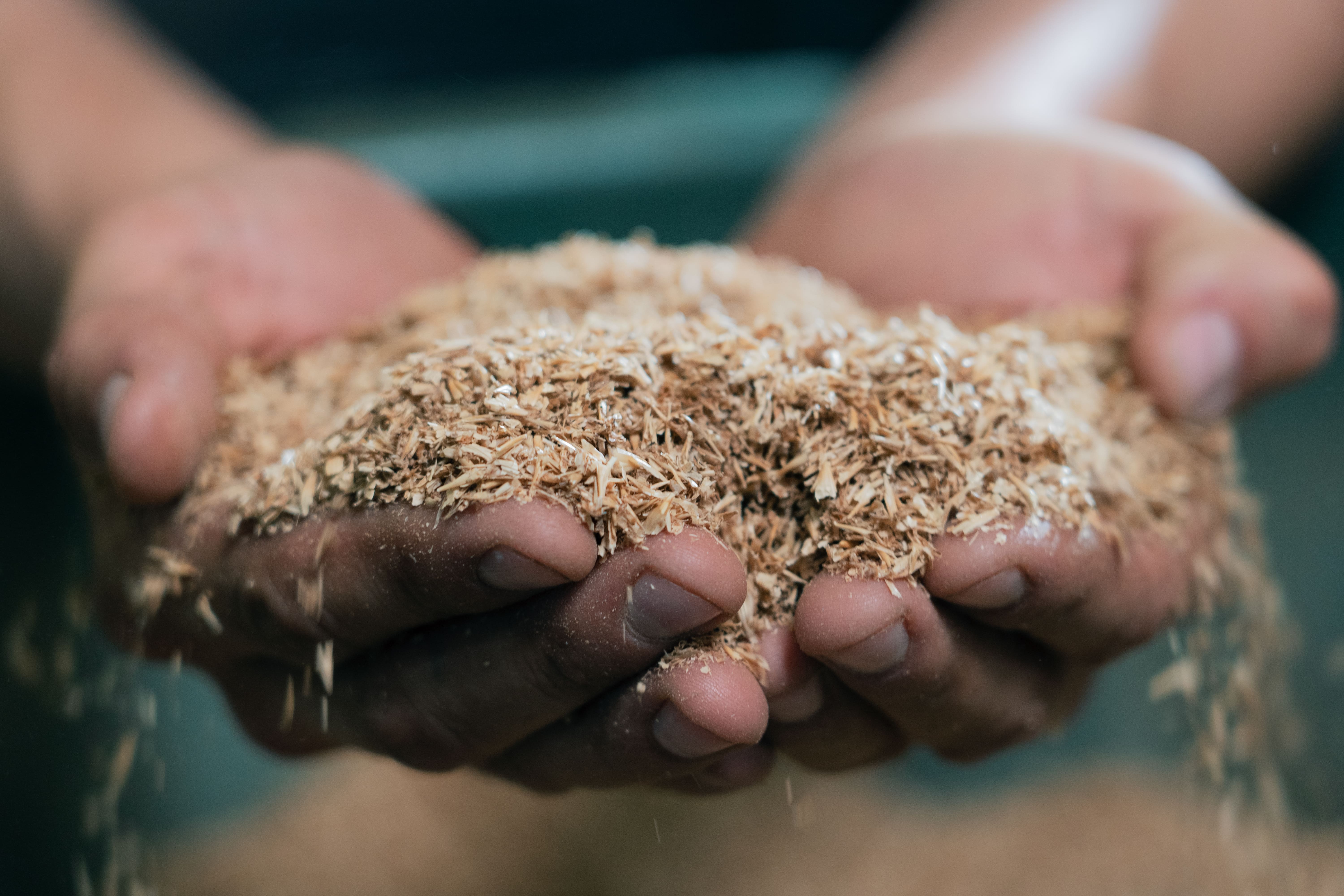
Every glass of beer leaves something behind: the spent grain that gave it its color and body, filtered out before fermentation even begins. Multiply that by the more than two billion liters of beer France drinks in a year, and you get a mountain of waste that mostly ends up as cattle feed, biogas, or landfill. Franck Grossel looked at that mountain and saw furniture. Today, his company Instead builds chairs, tables and fittings for hotels, restaurants and offices out of a material made almost entirely from what breweries throw away — and it's the only company doing it at scale.
Brand snapshot
Founded: 2020, following two years of R&D. The idea was born in 2017 and became a diploma project in 2018.
Based in: Nantes, France.
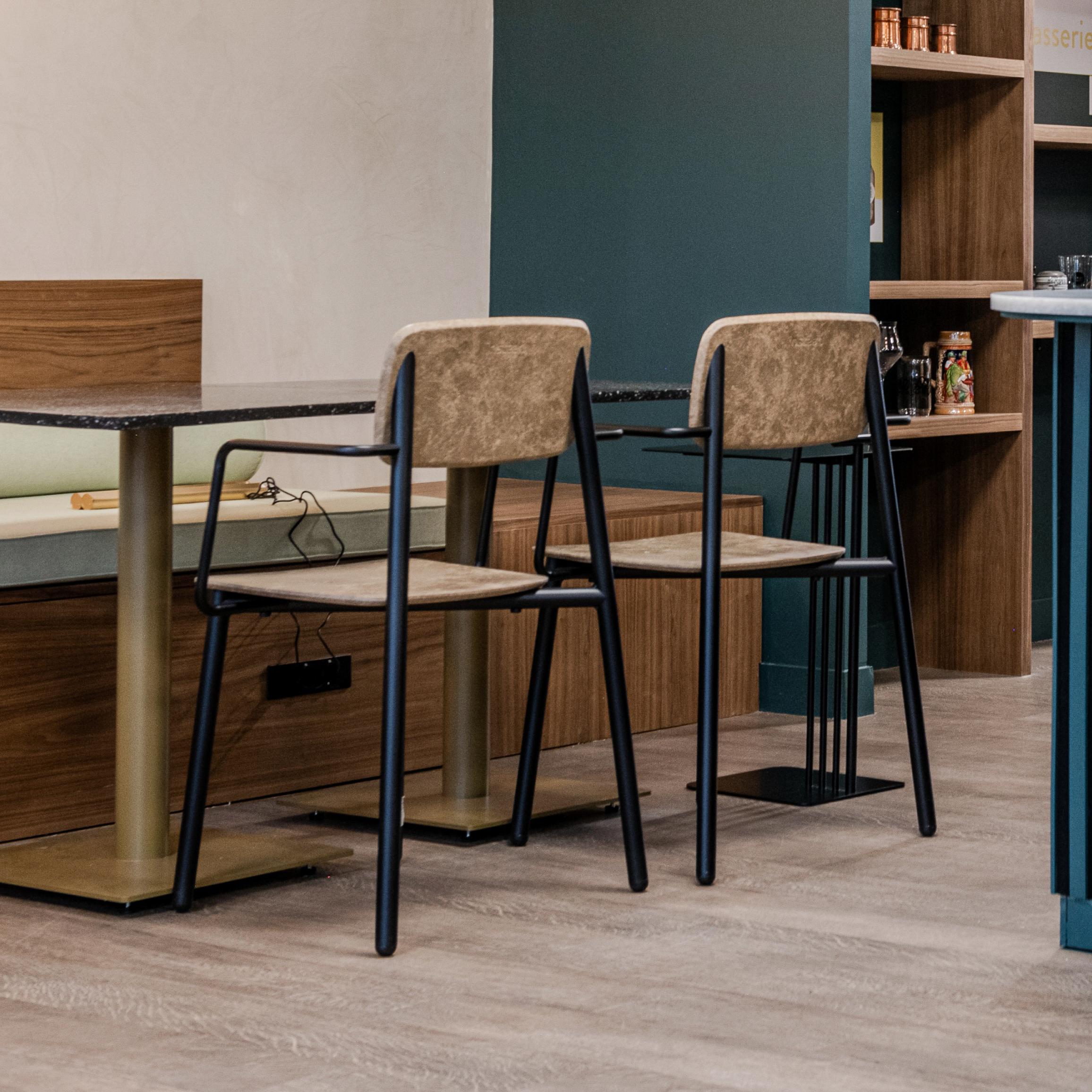
What they make: Professional furniture for the hospitality, food-service, office and public-sector markets, built from Le Balt® — a proprietary, 100% bio sourced and 100% recycled material combining brewery spent grain with recycled food packaging, with zero petrochemical resin. Available in finishes named after beer styles: blonde, ambrée, brune, blanche, stout, and marbled blends.
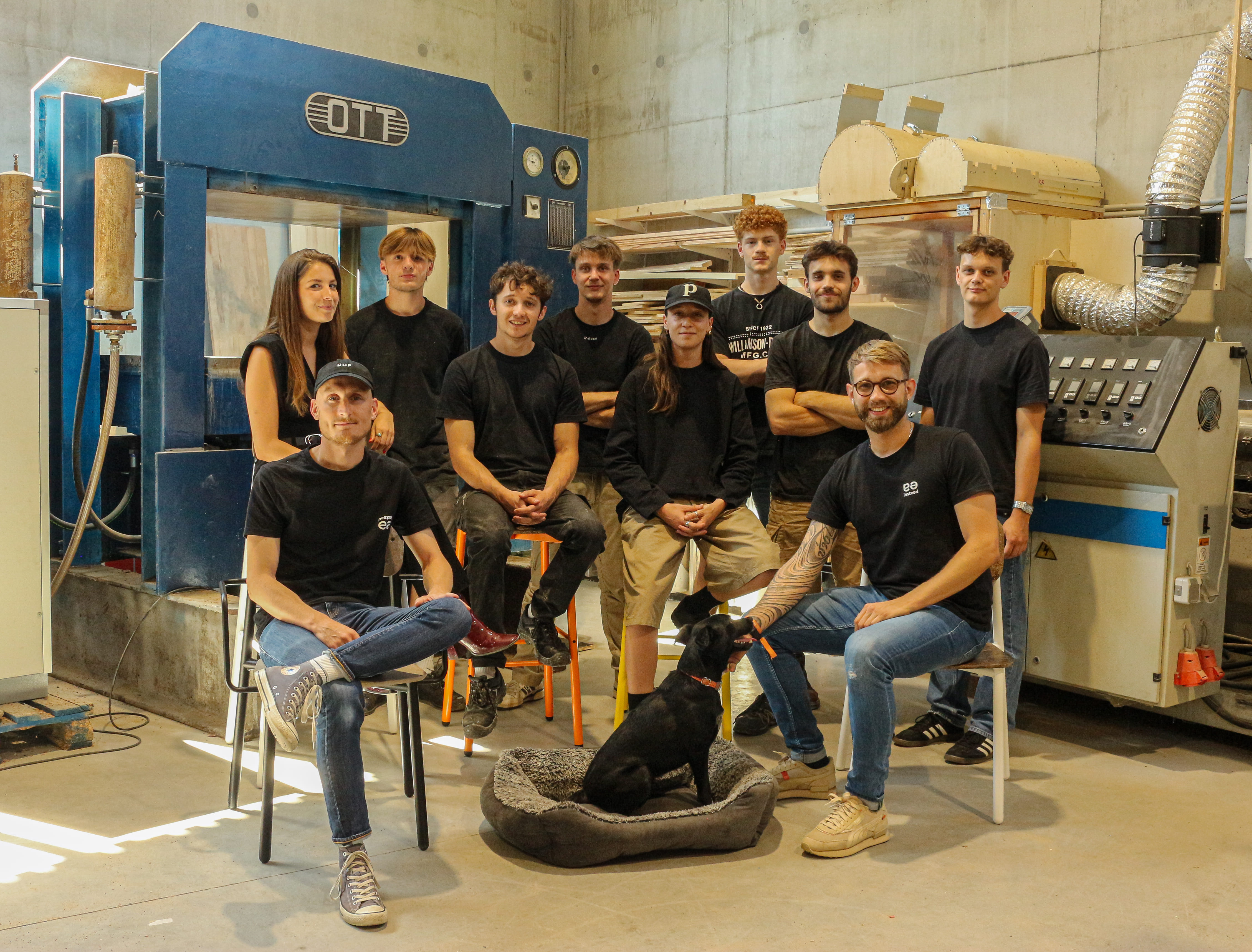
Team: 8 people (and a dog), led by founder Franck Grossel and co-founder Christophe Pilcher.
Market: Hotels, restaurants, cafés, coworking spaces and corporate offices across France and Belgium, with projects for groups including Pullman, Adagio, Thalazur, Oceania, Morning Coworking, EDF, Capgemini, Octopus Energy and Lhyfe.
Website: insteadmobilier.fr
The founder's story
Franck Grossel trained as a cabinetmaker before moving into product design — technical, hands-on, and increasingly uneasy about where his materials came from. "Despite everything we're told, forests are struggling," he says. "People say that for every tree we cut down, three are replanted. But if you cut down an oak and replant three pine saplings, that's not the same thing at all." Writing his final-year design project, he went looking for a waste material that could replace wood — testing ideas as unlikely as recycled car seatbelts and airbags — and coming up empty.
The answer arrived, fittingly, over a beer. "I was a little annoyed, beer in hand, and I thought: actually, everything generates waste — even what I'm drinking right now," he recalls. Digging into how beer is actually made, he learned that roughly 30% of what goes into a batch becomes waste for the brewer, and that only about half of that is put to good use as animal feed or biogas — the rest goes largely unvalorized. With more than two billion liters of beer consumed in France alone each year, that's a lot of raw material going nowhere.
"I thought it'd be nice to actually sit on what we're drinking. The image of the circular economy felt beautiful and convivial — that's how a joke turned into a business." — Franck Grossel, Founder, Instead
The first tests were about as scrappy as it gets: spent grain dried in his apartment oven, pressed together with a couple of clamps and glue bought at the local hardware store. When the beer turned solid, he knew there was a story worth telling. He graduated with the project in 2018, spent two years developing it further, and officially founded Instead in 2020 — the only company to have developed this specific process, and still the only one doing it today.
The growing pain
The first three years ran on an industrial partner who manufactured the furniture on Instead's behalf — workable, but limited on lead times, expertise, and how far the product could evolve. So Franck, joined by co-founder Christophe Pilcher, made the call to bring manufacturing in-house and build their own production line. They did it without taking on the kind of debt that usually comes with buying industrial machinery.
"One of the things I'm proudest of at Instead is that we built a real production line, with real capacity, without needing impossible loans to buy the machines. We didn't have the money — but when you're creative, you still find solutions." — Franck Grossel, Founder, Instead
That bootstrapped production line turned out to be exactly what Instead needed, because once demand caught up, it caught up fast. Revenue has climbed multiple times over year after year, with early 2026 already running at a multiple of the same period last year — the kind of trajectory most young brands would kill for, and one that brought its own kind of pressure. "It's often what we say: things are going almost too well, to the point that it puts us in a difficult spot," Franck admits.
Landing bigger and more frequent projects meant running a workshop, paying a growing team, and covering rent for the month ahead, while deposits of 30–50% on the orders that just came in weren't enough to also settle what was already owed. "Our first big orders actually did us more harm than good," he says, "because a deposit alone doesn't let you cover yesterday's bills and move forward on tomorrow's at the same time." Growing that quickly, on client payment terms of 30 to 45 days, meant the faster the order book filled up, the further Instead's cash was stretched to keep pace with it.
Why Shiperise
Because Instead was still building its financial track record, traditional lenders were cautious. Rather than ask for financing against unsold stock, Instead and Shiperise built something more specific: funding tied to confirmed purchase orders on real, named projects — proof that the demand was already there, before the money moved.
"We went and secured purchase orders before lining up the financing, to show Shiperise there were real projects behind it — rather than buying stock and hoping it sells. Today, banks wouldn't follow us the way Shiperise has. It's been a real boost to get where we are financially, even if the challenge is the same one, just at a bigger scale now." — Franck Grossel, Founder, Instead
What makes the arrangement work for a manufacturer like Instead is that it covers the whole span of an order, not just one part of it. Shiperise's financing follows the project from the very start — funding the purchase of raw materials, whether that's the spent grain and recycled packaging that go into Le Balt®, or components like the metal frames Instead sources from its metalworking supplier— through the labor and workshop time needed to actually build the pieces, the storage of finished furniture as it waits to ship, and finally the wait itself, until the B2B client's invoice, often due on 45-day terms, gets paid. For a manufacturer, that's the entire stretch where cash is tied up and nothing has come back in yet — and it's the stretch Instead used to have to bridge alone.
Results & impact
Financing structure: Purchase-order financing tied to specific, named B2B deliveries rather than speculative stock, scaling round by round as Instead's order book has grown.
Full-cycle coverage: Funding follows each order from raw materials through production, storage and delivery, all the way to the client's payment — rather than covering just the deposit gap.
Multi-shipment delivery: A recent hotel-group order financed and delivered across several shipments, freeing Instead from waiting on long client payment terms to keep production running between them.
Team growth: From a founder working solo to an 8-person team (and a dog) manufacturing full-time out of the Nantes workshop, alongside a revenue trajectory climbing several times over year after year.
What's next for Instead
Franck is clear that Instead's next chapter isn't about the product or the process — the material and the production line are proven. It's a commercial question: selling enough to put the capacity they've already built to full use. Looking five years out, he sees two possible paths: an acquisition by a major distributor or group wanting exclusive rights to Le Balt®, or a bigger fundraise to open Instead's model — "furniture breweries" — in cities across Europe.
"Being an entrepreneur is like jumping out of a plane and building your parachute on the way down. It's 99% struggle for 1% satisfaction — but that satisfaction, you don't find anywhere else." — Franck Grossel, Founder Instead
Asked to sum up the journey in one word, Franck didn't hesitate: "Labyrinth — because you have to find your own way out, and you never know in advance which turns you won't take."

